
Gov. Mark Gordon’s office submitted a waiver last month to the federal government for approval to ban people from using SNAP benefits to purchase soda and candy. That’s as a bill to try and create more restrictions on spices and other ingredients failed to gain momentum during the first week of the budget session in Cheyenne.
The in-motion proposal from the governor’s office would phase out soda first, then candy a year later. According to Gordon, it was developed by the Department of Family Services through “a broad public and stakeholder engagement process that included statewide surveys, public town halls, and direct consultations with retailers, beverage distributors, and SNAP-Ed providers.”
The U.S. Department of Agriculture (USDA) runs the Supplemental Nutrition Assistance Program (SNAP), formerly known as food stamps, which is used by roughly 28,000 Wyomingites every month. The agency also has the authority to approve waivers submitted by states, which can restrict which foods can be purchased with SNAP benefits.
Gordon said the waiver is about “encouraging healthier choices, not micromanaging people’s lives” in a recent press release.

“My executive order targeted products with no nutritional value while preserving dignity and personal responsibility, something Wyoming citizens feel strongly about,” he continued. “I believe going any further and outlawing staples like flour or sugar, ingredients families use to bake bread or cook meals at home, risks undermining the very families SNAP is meant to support.”
But a bill backed by the Joint Labor Health and Social Services Committee this session proposed taking the restrictions a step further.
HB 7 – SNAP benefits-waiver request aimed to ban “accessory foods” like coffee, tea, sugar and spices.
The draft legislation was a topic of debate throughout the interim. Rep. Rachel Rodriguez-Williams (R-Cody) introduced the bill on the House floor and told lawmakers, “Let’s go full scope.”
“Without HB 7, Wyoming misses the chance to lead in the Make America Healthy Again Movement, in which all of us would benefit to a healthier Wyoming,” she said.
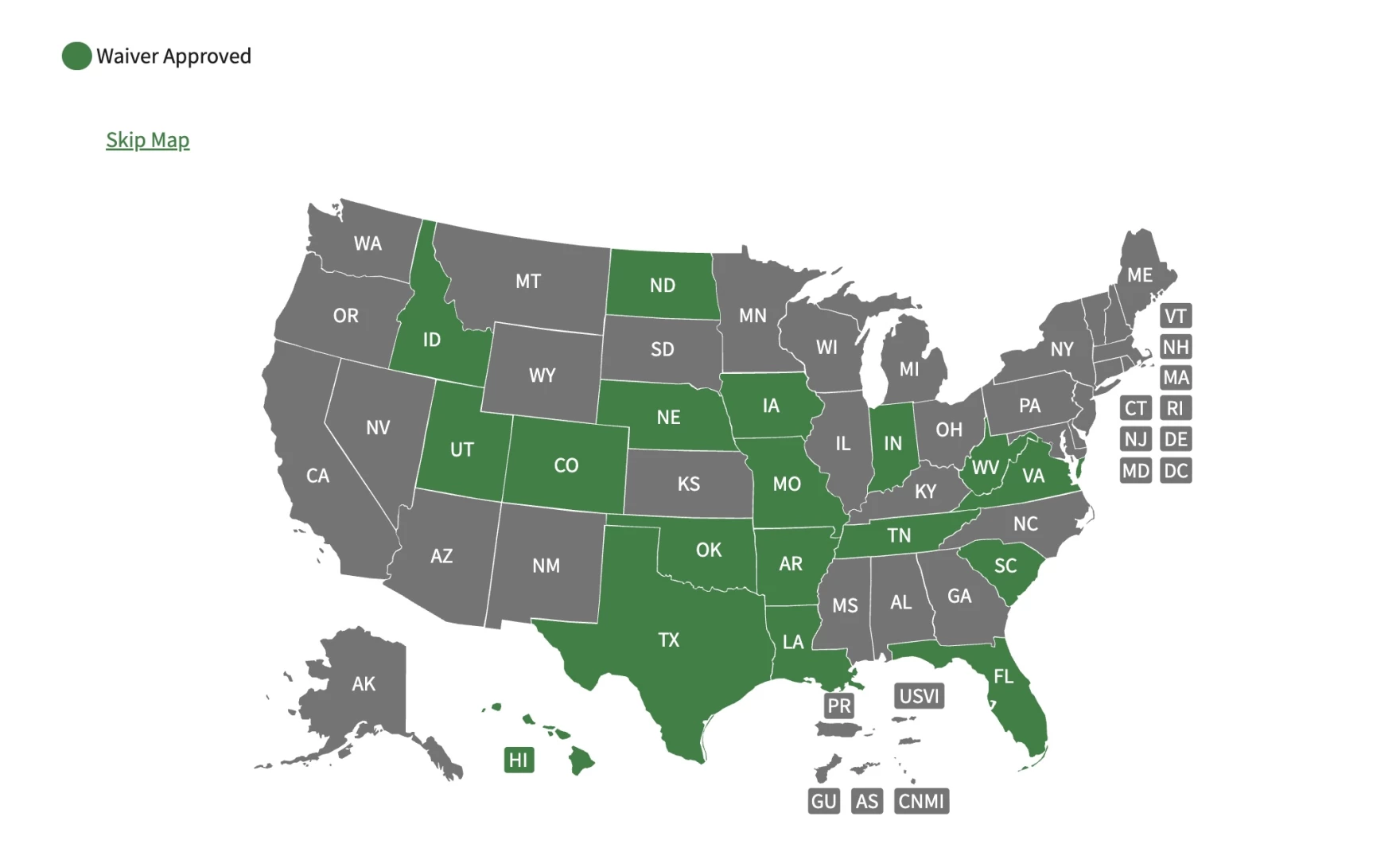
A map from the USDA website shows which states have had SNAP waiver requests approved by the agency. (U.S. Department of Agriculture)
Rodriguez-Williams added that the bill would “help families to eat healthier and essentially that’s a win for kids, taxpayers and public health.”
SNAP restrictions are part of the Trump administration’s Make America Healthy Again agenda. States including Colorado, Utah and Idaho have all gotten similar waivers approved in the last year.
But Rep. Ken Chestek (D-Laramie) urged fellow lawmakers to vote “no” on the bill.
“ There is no such thing as junk food. There’s only junk diets and it’s up to the individual families to decide what is appropriate foods,” he said. “ This is putting us closer to a nanny state where government tells you what you can and can’t eat. That’s not really the role of [the] government.”
Chestek shared concerns that banning a wider range of foods could create a shortage of SNAP providers, as businesses might have to go through the hassle and cost of re-programming their registers to a completely new set of criteria.
Rep. Lloyd Larsen (R-Lander) also advocated for a “no” vote and said having two different waiver requests from the governor and the Legislature could be counter-productive.
“ Passing this bill, which becomes complicated, then delays [Gordon’s executive order]. There’s been a lot of problems [of] states that get too detailed on getting their waivers approved,” he said.
Larsen said the more restrictive waiver proposal would also make it hard for people to buy ingredients to cook.
The bill ultimately failed in the House with a 37 to 25 vote. All bills needed a two-thirds majority to be introduced for further consideration during the budget session.
The USDA hasn’t approved or denied the waiver submitted by the governor’s office yet.