Make our newscast part of your daily listening routine. Subscribe on Spotify (or wherever you listen to podcasts).
Fat, healthy and prolific. And unbothered by the balmy start to winter.
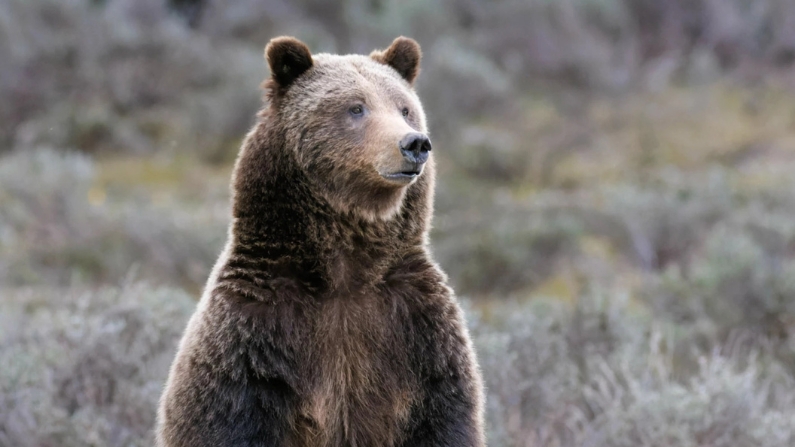
That’s how Brian DeBolt, the large carnivore conflict coordinator for the Wyoming Game and Fish Department, describes the state’s bear population, even with record-breaking fall temperatures.

When it comes to bear activity, DeBolt said he’s seeing “absolutely no negative impacts of this change in the weather” with late, warm falls.
November’s mean temperature was hottest on record for the town of Jackson at 8 degrees Fahrenheit warmer than the long-term average, according to meteorologist Jim Woodmancy. Forecasts in the near future show continued above-average temperatures, but NOAA’s three-month outlook still suggests above-average precipitation with below-average temperatures.
DeBolt cautioned, however, that when it comes to winter safety in bear country, humans should not let down the collective guard.
“We’ve had bear conflicts every month of the year,” he said. “It’s always good to keep trash secured all year.”
Bears don’t truly hibernate so much as enter a period of slowed metabolic activity, known as torpor, when light and food become scarce.
Heart rates and body temperatures sink. They don’t drink, urinate and defecate, but are still able to maintain their muscle mass, DeBolt said. They even give birth.
While it’s not known that weather impacts this biologically advantageous state, DeBolt said, human behavior does.
Bears can be disturbed by backcountry hikers venturing out in trails clear of snow and they will stay up to feed on unsecured human attractants, according to Kristin Combs, the executive director of Wyoming Wildlife Advocates.
“If there’s no snow and there’s still food out there and available, bears are still going to be out,” Combs said.
Game and Fish relocated a black bear from the Jackson area as recently as mid-December, DeBolt said.
Kate Gersh, associate director of the Jackson Hole Wildlife Foundation, is another advocate for year-round bear awareness.
“Pack spray on every winter backcountry trip, lock down all attractants, and stay sharp,” Gersh said in an email.
In the Greater Yellowstone Ecosystem, January is the only month backcountry adventurers are unlikely to run into a bear, she said. The main denning periods keep most bears inactive from late November through February or March, she added.
“But rare exceptions do occur, especially big males during mild conditions or freak warm spells that can spark mid-winter tracks,” she said.
A recent interagency report shows grizzly range in the GYE has stabilized in recent years after years of expansion and recovery, though WyoFile reporting said bear managers aren’t concerned.
Not everyone agrees, however, with DeBolt’s sunny assessment of bear populations, especially if unseasonably warm weather continues.
When it comes to grizzlies especially, which are listed as “threatened” under the Endangered Species Act, Combs said increasing human development and climate change loom.
“If we start to see these really dry years where we just have really bad berry crops and there’s not much wild food availability, then bears definitely are going to be driven closer to humans,” she said.
That could mean more conflicts, leading to more relocations or deaths. 2024 was an especially deadly year for area bruins with 2025 deaths close behind.
Gersh said more science would help paint a clearer picture of impacts to denning time, especially since the common term “in a normal year” is subject to change with the climate.