The second annual Jackson Hole Book Festival is all day Sept. 26 at Snow King Resort. Festival Co-founder and President Sharon Felzer sat down with KHOL Managing Editor Sophia Boyd-Fliegel to share what’s in store. (Felzer is on KHOL’s board of directors. KHOL is a sponsor of the event).
This interview has been edited for length and clarity. – Ed.
Sophia Boyd-Fliegel: I want you to take me back first to two years ago. This is the second festival. Why did you decide that Jackson Hole needed a book festival?
Sharon Felzer: In fact, three years ago is when I was inspired to think about organizing a book festival in Jackson. It was at a time in history when I felt that there just wasn’t enough civilized discourse, not necessarily in this community, but just sort of around the country and that there’s nothing better than conversation where people feel safe and have the freedom to speak their opinions.

I wanted a festival for Jackson where everyone could participate. There were no barriers related to ticket price. I just thought I wanted to have everyone’s voices at the table.
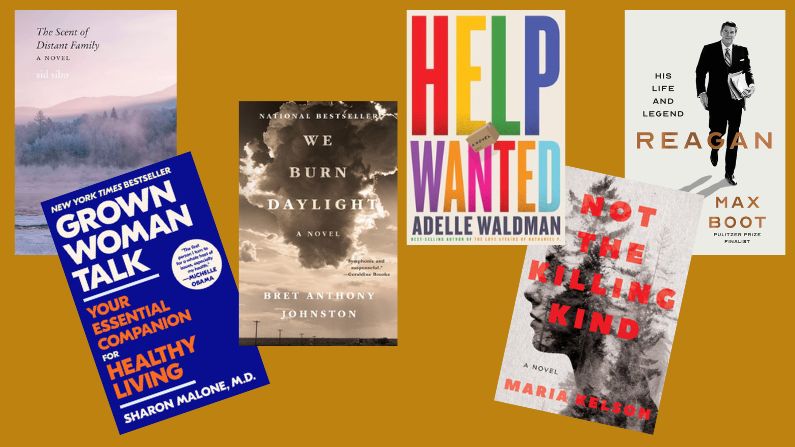
SBF: Let’s talk about some of the authors you’re bringing, starting with some of the non-fiction. Among them is Max Boot. His book, “Reagan,” is a biography on the former president. I think this book could be compelling to people across the political spectrum. Our current president is said to be very influenced by Reagan and his policies, [yet] many people disagree that Trump’s style is different from Reagan’s. Will there be a discussion of current events?
SF: Having finished the book about a month ago, it’s a terrific profile of a president whom people had really strong views about. This is an open conversation, and there’ll be a session called “Leadership and Integrity” along with retired Lt.Col. Alexander Vindman, and it’ll be moderated by Rick Atkinson. I would not be surprised if in that session, there’ll be a lot of questions about what leadership and integrity looks like today. And how has this model, this Reagan model of leadership, changed over the years?
SBF: There’s the more locally situated book, “The Crazies,” from Amy Gamerman. This is a book about landlust in the American West. It chronicles the rise and fall of a wind farm that triggers a 21st century range war between a struggling fifth generation rancher and some next door billionaires.
This is a compelling book to a Jackson Hole audience, where we have ranchers and billionaires and billionaires who are ranchers, and just this strange demographic mix.
SF: It’s like reading People magazine, this battle about land and wind and renewable energy. And it’s also very technical. So you really learn a lot about wind and you expect people to be on political sides. You expect the rancher to be, if he’s pro-wind, then he’s lefty as they might think. But actually it’s the only way for these ranchers to survive, to be able to pass their land on, to have it used in a way that’s financially productive for them and for their families and for the legacy. And [Gamerman] is a terrific storyteller. She actually helped start the mansion section in the Wall Street Journal many years ago. So she has just a way of writing about places and people and wealth and struggles.
SBF: There’s a book about women’s health from Dr. Sharon Malone. She’s an OB-GYN based in Washington, D.C. I am personally hearing more about women’s health in the news. Is this a part of that conversation?
SF: In a lot of ways, it’s a very practical play-by-play book about how women can advocate for themselves. Not just in the research world and in the conversation world. In other words, women need to talk. It’s called “Grown Woman Talk.” But also with your own doctor, even when the doctors are women, it is really going in and learning how to be prepared and what kinds of questions you want to bring to the fore and what kinds of things you want to be thinking about as you age as a woman. Whether it’s related to your children or related to your wealth or your business, it’s, in a sense, how to advocate. It’ll be a really interesting conversation for so many women in the valley who all are often so healthy but still face health issues as we get older.
SBF: We’ve talked a lot about non-fiction and I want to hear about some of the fiction you’re excited about.
SF: It’s great to have local fiction writers. We’re so excited about having Maria Kelson and Sid Sibo really helping to build this literary community. And in fact, the [Jackson Hole] Writers’ Conference is in a few weeks. Two books I’m pretty excited about as well are “We Burn Daylight” [by] Brett Johnston. It’s a fanciful tale of modern day Romeo and Julia in Waco, Texas, at a cult situation. It touches on issues related to love and grief and family and belief, getting pulled into an ideology and beliefs that probably aren’t good for you. I think we’re seeing a lot of that in today’s world, people getting pulled into the left or the right, sort of radicalized. And then Adelle Waldman’s very relevant book called “Help Wanted” about what life is like working at a big box store and not having a lot of hope, not a lot of aspiration. She worked at a box store for about six months before writing this book. And the characters are just longing for opportunity. And the reason why I have her as part of a nonfiction panel on government for the people and by the people is because she also does a lot of writing of essays on opportunity and the economics of today’s world for people who aren’t as lucky as a lot of us to have had great educations and been able to afford great educations.
SBF: In Jackson Hole we have people from all different backgrounds working in the service industry. And it’s not always clear what the ladder is there, but so many people here can relate to that feeling of [being] economically stuck. Even if you enjoy your job and enjoy working with people, it’s so exhausting.
SF: That’s what she depicts so well, the way you just described it, that exhaustion of, ‘I pick myself up every day, I go to work, I’m doing exactly what I was told was the right thing to do, and I don’t know if tomorrow looks that great.’ She really taps into people’s emotional exhaustion.