Subscribe to Jackson Unpacked. Available wherever you get your podcasts.
Rolling Stone said country singer Luke Bell of Cody was “poised to be the next big thing.” He had opened for famed artists like Dwight Yoakam and Willie Nelson and garnered a growing fanbase drawn to his traditional country sound. But his rise was cut short when the 32-year-old died from a fentanyl overdose in Arizona in 2022 after a struggle with mental illness.
“The King is Back,” a 28-song posthumous album of mostly unreleased songs written between 2013 and 2016, came out in early November. All proceeds from the album’s sale will go to the Luke Bell Memorial Affordable Counseling Program, a nonprofit started by the family to provide counseling in Northwest Wyoming.

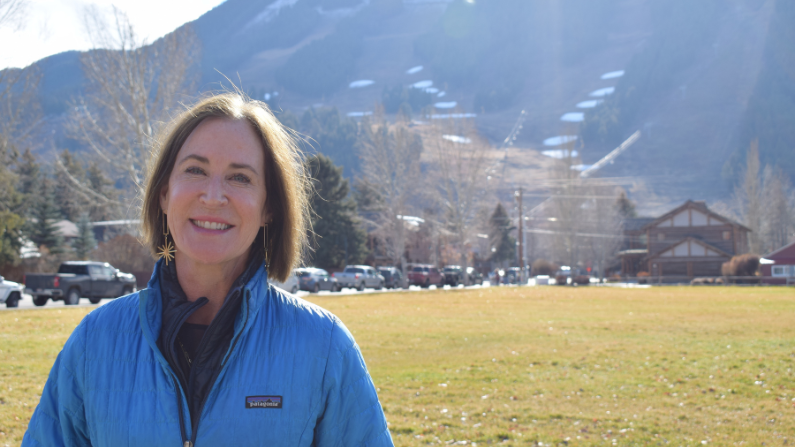
Sara Flitner, Bell’s aunt, founded Becoming Jackson Whole, a nonprofit supporting mental health in Jackson, in 2021. The former mayor sat down with KHOL’s Dante Filpula Ankney to talk about her relationship with her nephew and how his death has bolstered her work’s purpose.
This interview has been edited for length and clarity. – Ed.
Dante Filpula Ankney: Sarah, Luke Bell, your nephew, is a country singer who’s making headlines for the posthumous release of “The King is Back.” I wonder if you could describe Luke’s music?
Sara Flitner: Oh my gosh, I think that’s impossible. You have to listen to it, right? But I just think of him as a meteor on stage. You know, it’s just explosions and energy and he’s got the harmonica around his neck. He’s playing like crazy on the guitar. He is singing. There’s sweat flying. He had so much energy and joy and passion. I love the King is Back. I’m so glad that it’s out there.
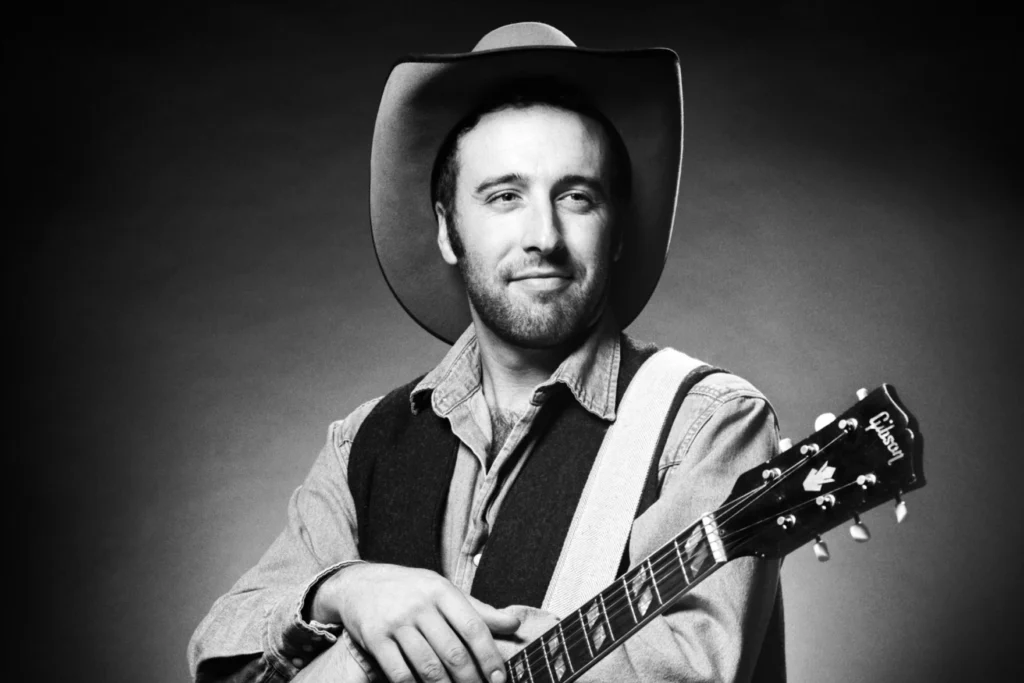
Laura E. Partain / Luke Bell Facebook page
DFA: I wonder if you could describe your relationship with Luke Bell.
SF: Well, I was his favorite aunt, of course. My relationship with Luke was just special. Luke was the firstborn grandson. He was my first nephew. And he was just such an adventuresome, stubborn, willful, creative kid, just so unique. We were so surprised when he died because we didn’t expect so much attention. We had no idea that Luke had made such an impact on so many people around him. I think what I loved about Luke and the way that I got to experience Luke and spend time with him is exactly the reason that he resonates so much still now with his music. He was a tender, caring, passionate, talented musician and person. He really, really cared about, as trite as it might sound, about his fellow man, woman. He just, he really cared about people, and that showed.
DFA: You mentioned the impact that his music had on so many people. I wonder if you could tell me more about that?
SF: Luke was authentic. Luke truly cared and saw the humanity in people. And I know that’s why. There are things that I can’t explain, like some of the lyrics at levels that just don’t match his age at the time that he was writing about the working man’s blues and even experiences that he just hadn’t had, necessarily. But he could just see right from heart to heart. Luke lived through that ability to perceive a person and to see the dignity, the inherent dignity in every single human being. And for whatever reason, he was always attracted to the kind of less accepted, the less shiny and presentable. He had a real soft spot for the down and out, or the people who were looking at life through, a tougher circumstance. And I love that. He cared so deeply and it just, it wasn’t an act. It wasn’t put on.
DFA: You’ve started this nonprofit, it’s called Becoming Jackson Whole, focusing on mindfulness. I wonder if your work with Jackson Hole has any influence from Luke?
SF: Of course it does. It was an idea that I had before Luke got sick. But ironically, you know, Luke was literally the only young person in my life at the time who was interested in mindfulness or meditation. So when I began to formalize this idea, I mean, I must have started thinking about it and talking about it in the, you know, 2010 and on. Luke died in 2022 when he was 32 years old. He would have been in high school when I was thinking along these lines, and he always wanted to know what kind of meditation I was most interested in. So there was that fun connection, interesting connection, but it wasn’t until much later when Luke began to taste success and he was still early 20s, managing a band of five people and traveling all over in a broken-down van, when he would ask when we would see each other ‘Could we do a practice’? And ‘What kind of meditation would you recommend for these kinds of circumstances’? And ‘Do you have any advice and how do I keep it going’? It’s so hectic. I cherished those memories because it felt like he was getting some of his mental health needs met and they were on the continuum, like you and I would have. It wasn’t, of course, until later that I would realize the kind of work that I do at Becoming Jackson Whole was going to touch what Luke was struggling with.
DFA: Sarah, I wonder what you hope for going forward.
SF: What I hope, and what my sister hopes, and what our whole family hopes, is that culturally and in society and in community that we begin to understand that mental health, like physical health, is always on a continuum. And there are things that we can do to protect our physical health and our mental health. And of course, mindfulness and focused attention. Training is one of those things. Seeking mental health providers when you need a sounding board or are struggling with something. Certainly, seeking deeper care if you are on the continuum where Luke found himself after a psychotic break. What we hope is that A, people learn about the things that they can do to protect themselves when possible. And B, that they learn it’s not always possible to protect yourself. Just like if I break my leg, I need the help of a physician to set that bone and perhaps do surgery. I can’t just heal it by myself. There’s no shame in that. No one judges me for going to the doctor to help my body stay healthy. As far as we may have come, we have so much farther to go in terms of understanding what mental illness really is and how it affects the brain. I want people to feel the compassion that I think Luke felt for people in general.
DFA: Why do you think the title is ‘The King is Back?’
SF: I think it was an anthem. I think it was a prayer, honestly. He wrote that when he was beginning to suffer from mental illness, or he began to play it more. I think he’s starting to realize that things are not going the way you might hope. And his music was part of his therapy, part of a mantra: ‘I’m back, I am back, party’s on.’ That’s how I think of it.