
Make our newscast part of your daily listening routine. Subscribe on Spotify (or wherever you listen to podcasts).
Bob Frodeman bought his house in Hoback over a decade ago.
“We were told the water doesn’t taste very good, which it doesn’t,” he said. “[but] no one really said anything about health concerns.”

Since buying the home he said his homeowner association dues have more than doubled, mostly, to treat polluted water.
The community at the mouth of the Snake River Canyon has wells that are slow to refill and long polluted with nitrates, a carcinogen. And Hoback is expected to grow given regional housing pressures.
The proposed solution, the area’s first centralized water system, is needed. And it will likely lead to more growth due to the region’s housing pressures, Frodeman said.
“It’s likely to spur development,” Frodeman said, “and if we’re gonna spur development, we probably should have some kind of community planning process.”
To address that, residents, including Frodeman, formed the quasi-governmental Hoback Junction Water and Sewer District (HJWSD) several years ago to lead efforts toward constructing a well, water treatment and water storage system for domestic use and fire suppression.
It would be, if built, a huge step toward curing the growing community’s water woes.
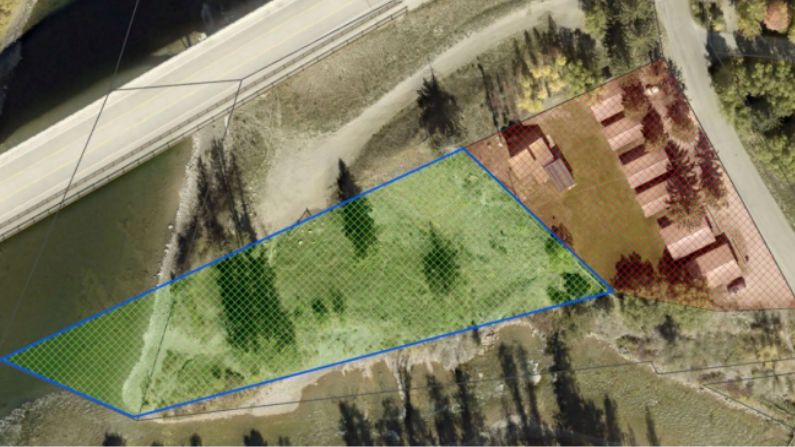
On Aug. 19, Teton County Commissioners sent a letter committing to providing a less than an acre easement on county land for the water supply system.
Though the exact size is pending final designs, the land’s market value is estimated to be worth up to 115 thousand dollars. The county is not asking for compensation.
Chris Peltz was hired by the county last year to lead a newly formed board and implement a 20-year plan for water quality.
One of its top priorities was Hoback’s drinking water.
“The need has been well understood for 20 years, maybe more at this point,” Peltz said.
“Hoback has funding from the state, the county has committed $3 million toward this, and at this point now we’re in the sort of midpoint of getting the design done,” Peltz said.
With Teton County’s support, both land and funding, they’re counting on the state to provide additional funds to complete the project and for construction to begin next summer.