Make our newscast part of your daily listening routine. Subscribe on Spotify (or wherever you listen to podcasts).
Teton County School District’s Interim Superintendent Scott Crisp will be steering schools through an important year. Securing state funding and finding a balance with technology, including new artificial intelligence guidelines and a continued no-phones policy, are at the forefront for the 2025-2026 school year.
The district no longer has to worry about losing $235,000 in federal funds which the Trump administration froze in late June and unfroze in late July. Lawmakers from both sides of the aisle had lobbied for unfreezing the money for teacher education and migrant education, English-learner services and before-and-after school programs, NPR reported.

Crisp confirmed this year’s federal funding is similar to last. The former assistant superintendent is taking over from Gillian Chapman, who led the district for a decade and will take on a similar role in her home state of Kansas.
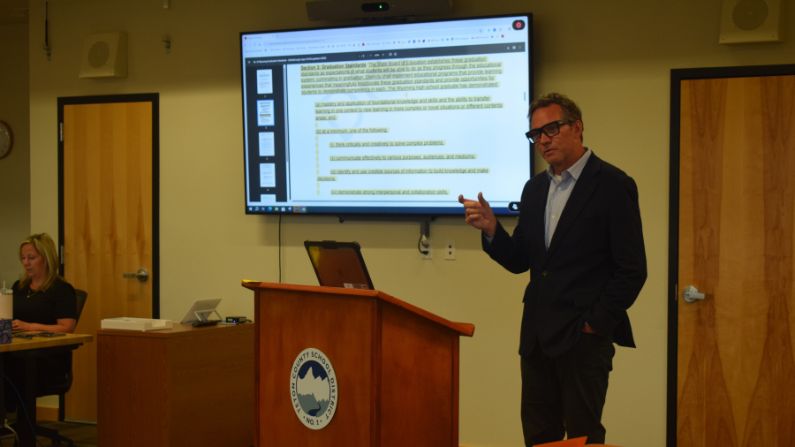
This school year, state funding is the focus, though Crisp didn’t want to raise a red flag. Compared to other districts, Teton County is well-funded, he told a small crowd of about eight parents and district trustees last week at a meet-and-greet.
“We need to continue to be funded well, and we can always use additional funding for things that we immediately need around facilities, teacher wages, potential insurance changes long term,” Crisp said.
In general, though, this is a “recalibration” year for Wyoming’s public schools. Every five years, the state determines our overall funding levels. For school district leaders, that means lobbying trips to Casper, particularly focused on securing cost-of-living adjustments for teachers, filling vacancies that are persistent, but don’t stray from the norm across other districts.
Overall, Crisp wanted the community to know he believes in student choice and education beyond grades.
“That really gets to the heart of how the human interacts, not only in teams, [but also] problem solving, activities, leadership, interpersonal skills,” Crisp said.
That includes beefed-up guidelines for artificial intelligence usage, new this year for teachers and students when appropriate. Crisp said the emphasis is on privacy and education and based around a platform called SchoolAI. The high school will keep policies new last year that limit phone use and cracked down on tardies, he said.
“It actually teaches kids how to use it appropriately as they’re using it,” he said of the platform. With the challenges of AI also comes the opportunity to make lessons “deeper and more sophisticated,” he said.
Crisp is in his first year at the helm, but no stranger to the district, having worked for Teton County’s public schools since 1998. This year, the former history teacher and South-Carolina native aims to spread connection.
“When I was at the high school, it was always imperative for me to walk the halls or classrooms and say hello to students who maybe have no one around them, who feel disconnected in school, who don’t have a peer friend group like maybe many others do,” he said.
Teton County schools start in two weeks on Aug. 25. That’s an earlier start date than years past. District trustees voted in February to end the long-standing tradition of starting after Labor Day, in large part, to allow teachers more time for professional development and collaboration.